

Seeing the Mask
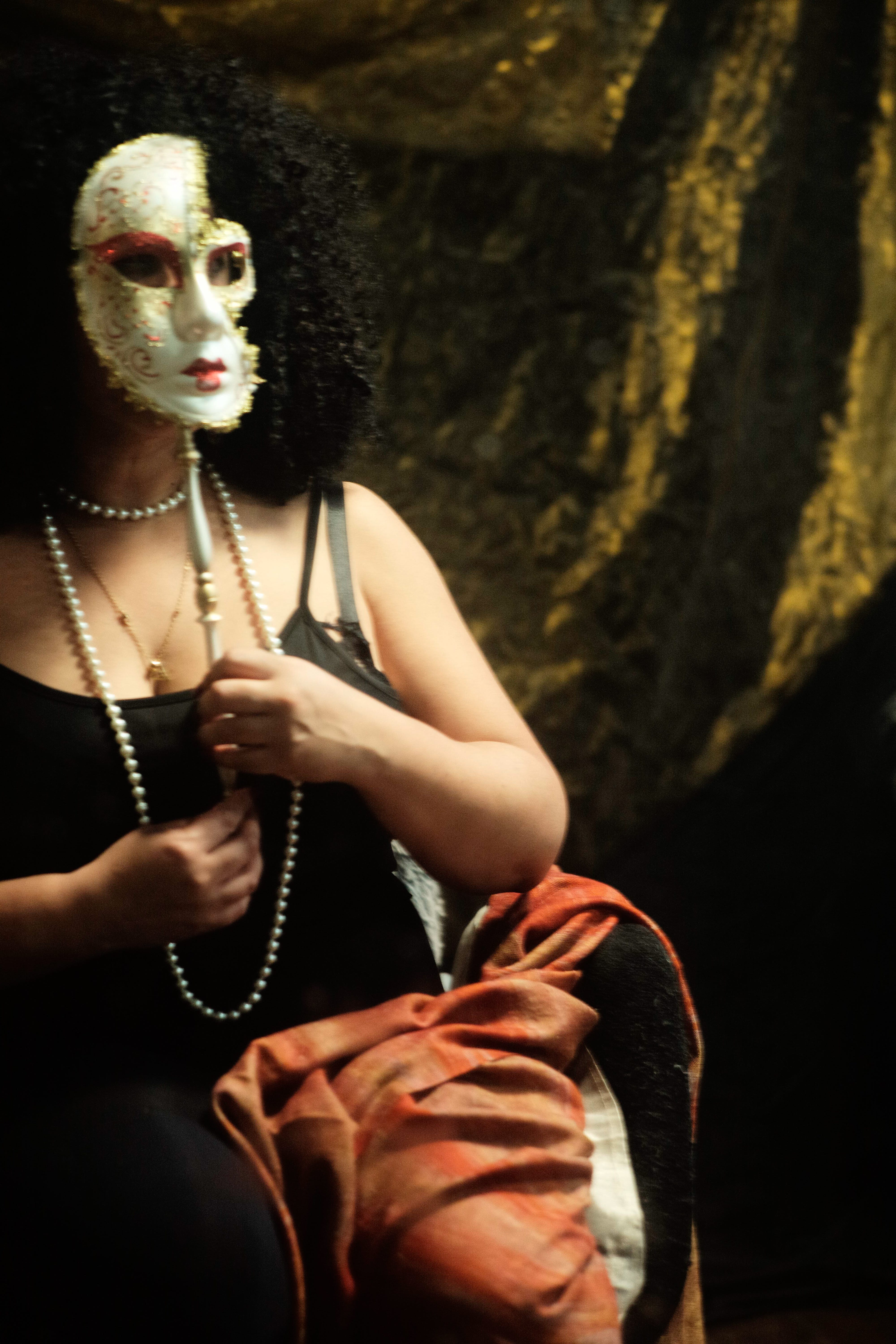
A woman sits wearing a mask. She is dressed as if for a painting from another century—pearls, dark fabric, bare shoulders. Someone has arranged her this way. Someone has decided she should impersonate a portrait that already exists somewhere else, in oil paint, in a museum perhaps, or in our collective memory of what portraits used to look like.
The first question is: who decided this? And for whom?
In traditional European oil painting, the portrait served a clear function. It was a piece of property. The wealthy commissioned portraits to assert their status, to claim a place in history, to say: I existed, I mattered, I owned things—including this painting of myself. The portrait was proof of permanence in a world where most people left no trace.
But this is a photograph, not a painting. And the woman wears a mask. Already something has shifted.
The mask tells us immediately: this is not about revealing identity. It is about concealing it. Or perhaps about revealing that al…
